OKCPD Change Procedures To Suspect Lineups
Wrongful convictions from police lineups are a criticism that is heard all across the country. Now, one police department in Oklahoma is changing its policies to make sure innocent people do not end up behind bars.Friday, August 3rd 2012, 6:11 pm

Wrongful convictions from police lineups are a criticism that is heard all across the country. Now, one police department in Oklahoma is changing its policies to make sure innocent people do not end up behind bars.
Staring down the barrel of a gun during a crime can leave an eyewitness not only shaken, but also uncertain of the suspect. With most crimes, investigators use witnesses to help fill in the blanks.
"You find six subjects that fit the description of the subject…gender, height, weight," said Oklahoma City Police deputy chief, Johnny Kuhlman.
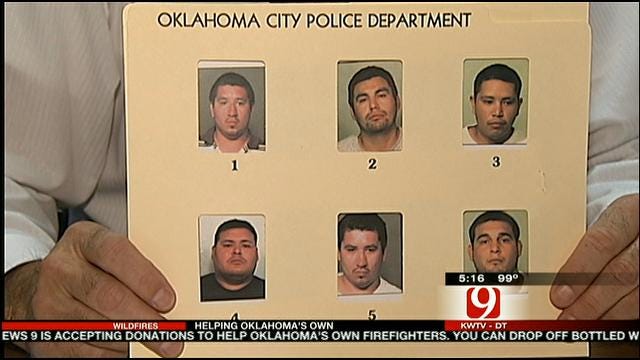
In this case, inmates are chosen at random to illustrate how Oklahoma City Police had previously presented photo lineups.
"All six photographs are placed in this folder and shown to the witness or victim at the same time," Kuhlman said.
Kuhlman explains the procedure is not bad, but can be known to overwhelm a witness and have them think the suspect is one of the six photographs. Even during the presentation to our cameras, police are able to detect at least one of the common concerns with this system.
"As I see your eyes they are going from one to the other bouncing back very quickly and that's exactly what a witness is going to do," said Kuhlman.
So, Oklahoma City Police adopted a new policy. Detectives now present possible suspects sequentially. And to exclude police influence on identification, the officer administering the photos will have no background on the case.
"I show all six photographs to you and I have no personal knowledge if any of the six are suspects or who the suspect is," explained Kuhlman.
Studies show that this procedure decreases eyewitness mistakes, but result in less identifications.
"They are more quality as opposed to just quantity. Even though you may not get as many identifications, the identifications you do get are very accurate.
Oklahoma City Police do not have a known problem with false identification, but say it's a decision to upgrade their procedures.
In the last month police say they've had positive IDs and are collecting data for comparison.

Get The Daily Update!
Be among the first to get breaking news, weather, and general news updates from News 9 delivered right to your inbox!
More Like This

August 3rd, 2012

March 22nd, 2024

March 14th, 2024

February 9th, 2024
Top Headlines

April 25th, 2024

April 25th, 2024


April 25th, 2024